


World Building
“This was difficult to understand within the context of Harmonia, where the economic system was basically one of the shared goods. That different people could exercise more or less spending power was foreign to him. But he could imagine it, that pre-Scientica world of social and economic competition.”
Scientica is the name of the supercomputer that rules its sovereign state of Harmonia. Upon being introduced to this computer-governed society, you will realize that it differs greatly from your familiar reality.
As the story progresses, it becomes clear that over the last five centuries, Scientica has solidified its control through its unique policies and actions. People have little power, yet they seem happy and content. Scientica has full control over their lives, including jobs, food, shelter, having children, and education. During the period of the story, this control had remained unruffled for many human generations. The premise of my argument is that a culture can endure with little transformation over a long span if we account for and minimize human variability. After eliminating war, poverty, violence, greed, and material wealth, Scientica serves as the sole, unwavering governing element of Harmonia.
How likely is this to happen? Will humans relinquish control to a supercomputer? Speculation opens doors where success, however slight, remains conceivable. Which is where my story begins and unfolds, as if this were possible.
The author Ursula K. Le Guin (1929-2018) is greatly admired for her world building in key works of speculative fiction. Born into a family of anthropologists, she used her knowledge of cultural anthropology to construct new and unusual settings for her books. The outcome was a profound comprehension that surpassed that of most other writers.
I also allow cultural anthropology to guide my world building. Much of what I’ve learned is from my university studies, but also from working with several anthropologists on their textbooks. I am indebted to anthropologists including Conrad Phillip Kottak, Robert L. Welsch, Luis A. Vivanco, and Agustín Fuentes for giving me this perspective.
When thinking about Harmonia, I wanted to offer some foundational elements to underpin the surface-level aspects that emerge. The society seems at peace, but what holds it together? What mechanism governs the important decisions affecting people's lives? How did Harmonian society adapt to living in a world that became extremely hot and dry? How freely do people really converse? What restrictions hinder them while being watched? Is it possible to recall a past that differs from the one Scientica preserves? (Thom Holmes)
Get news, recommended reads, deals, and more from Flying Turtle Press.
Latest dispatches
News, thoughts, and discussion.

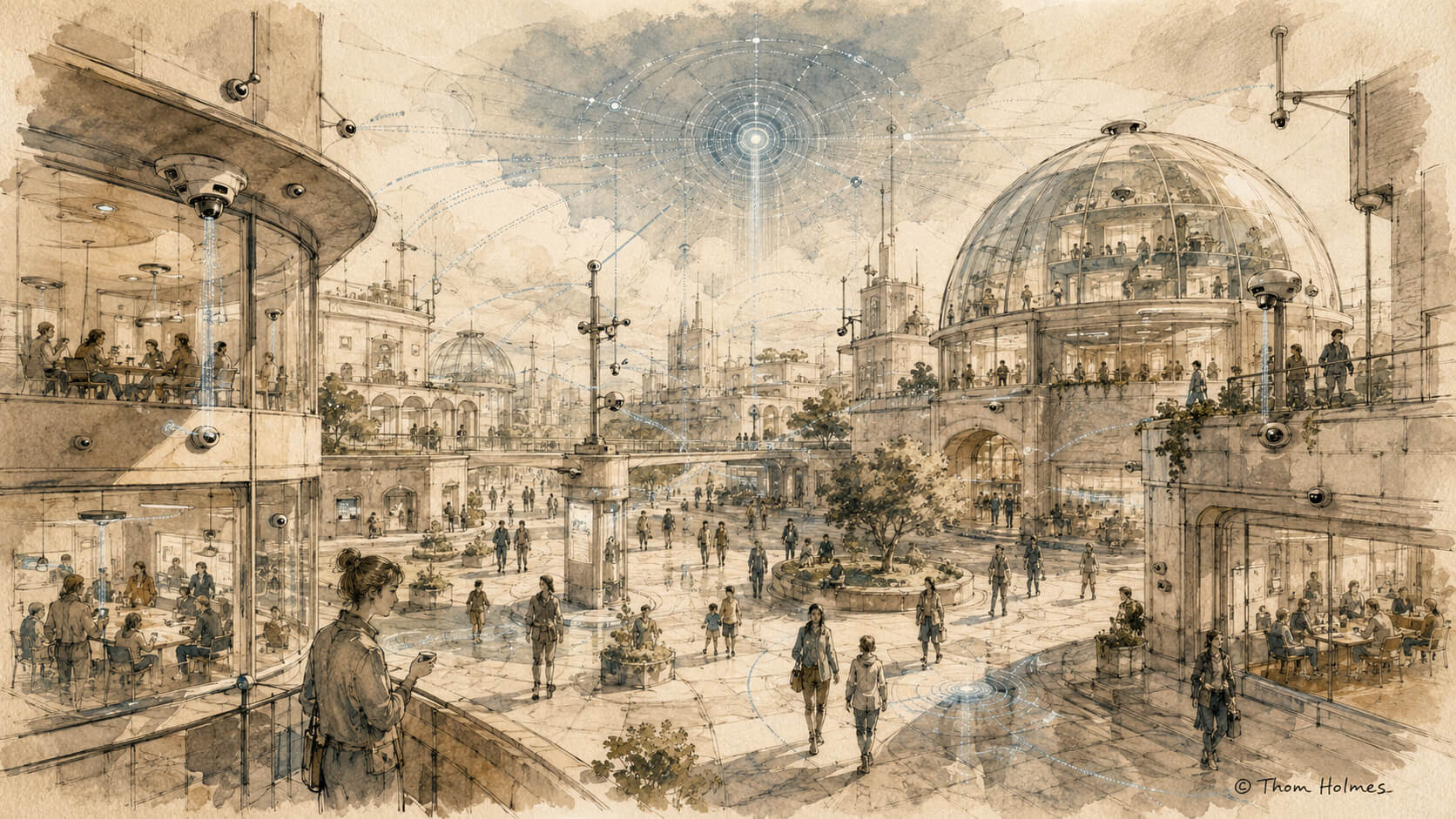
Under Surveillance
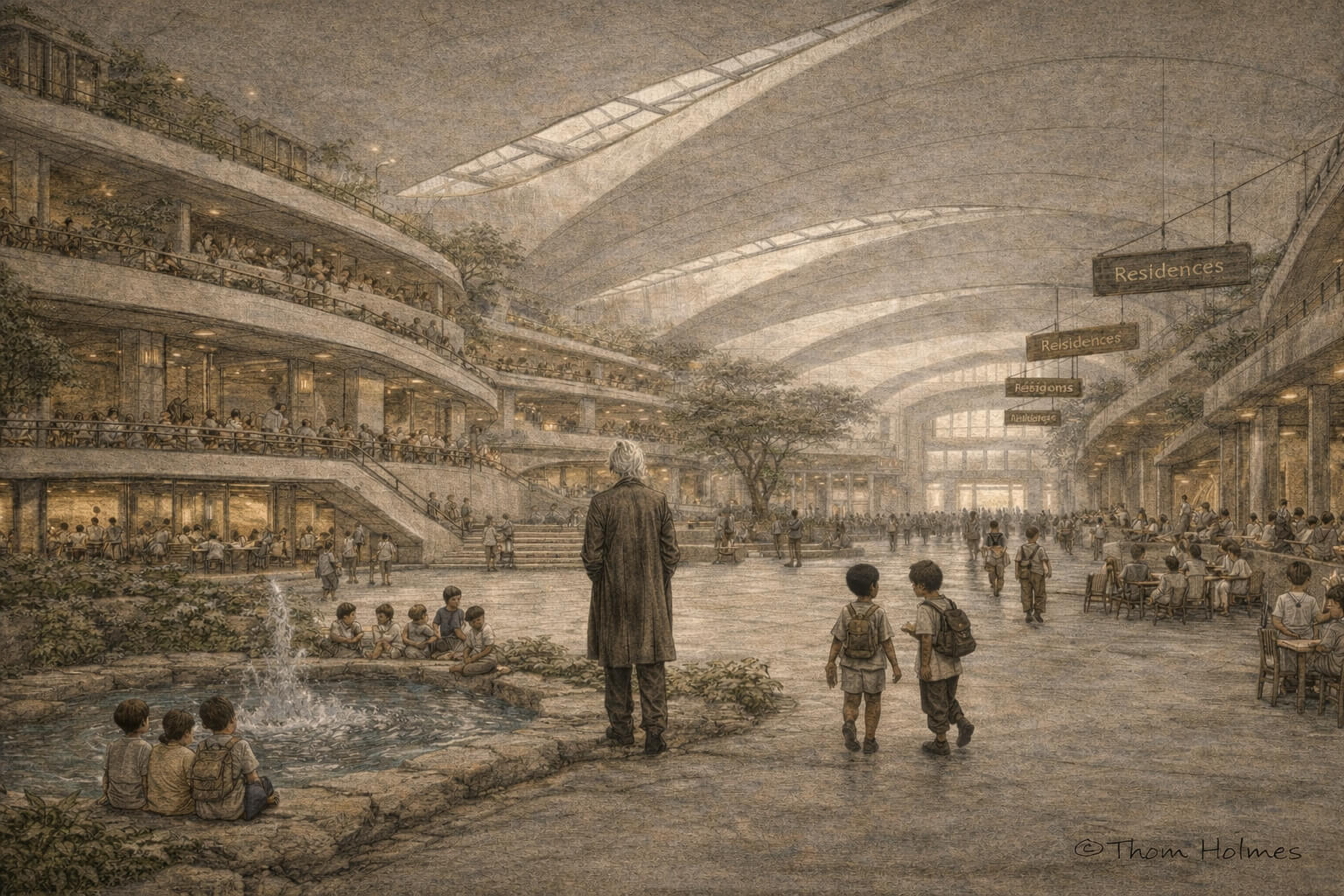
Kinship
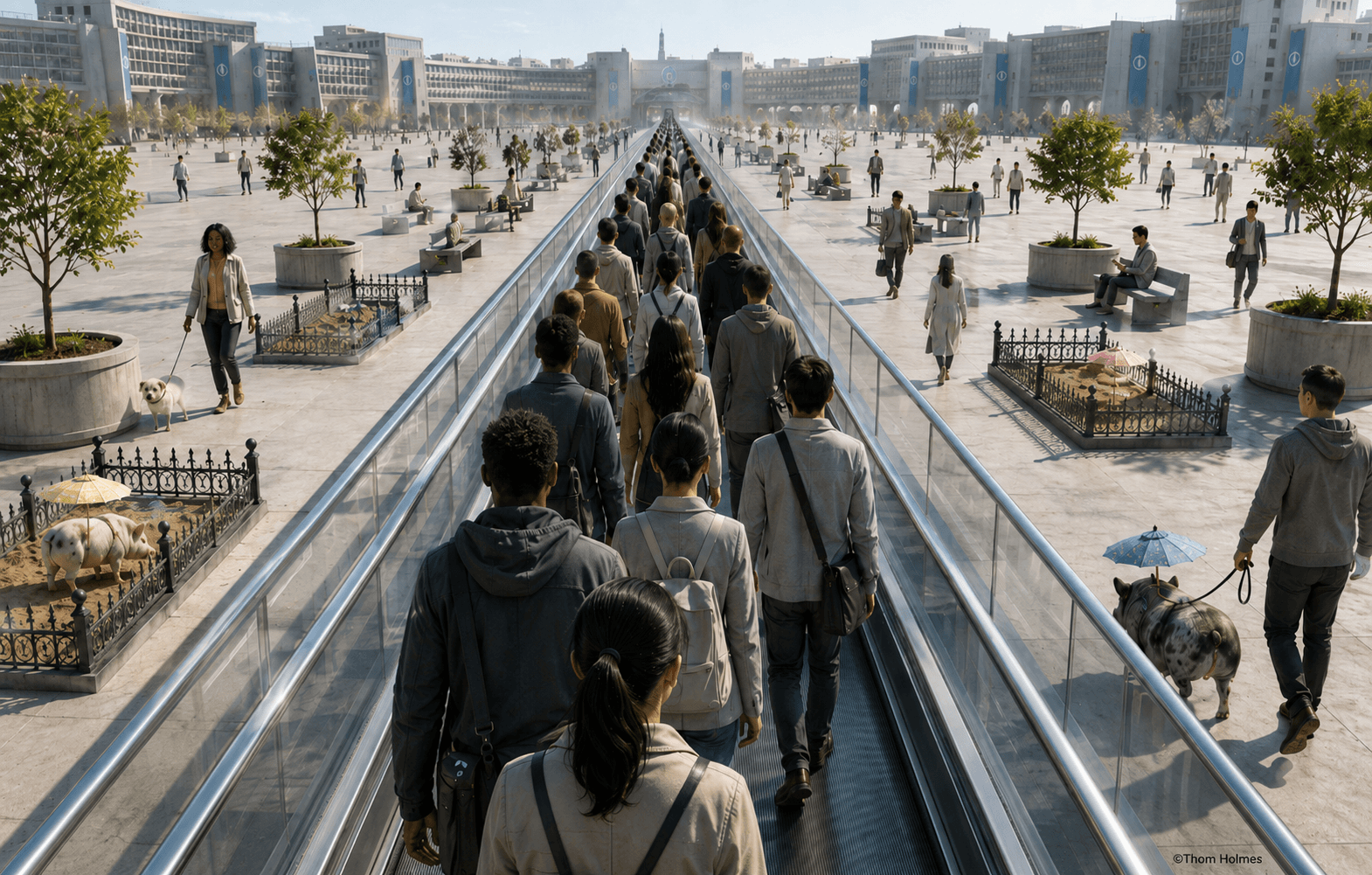
Moving Walkways
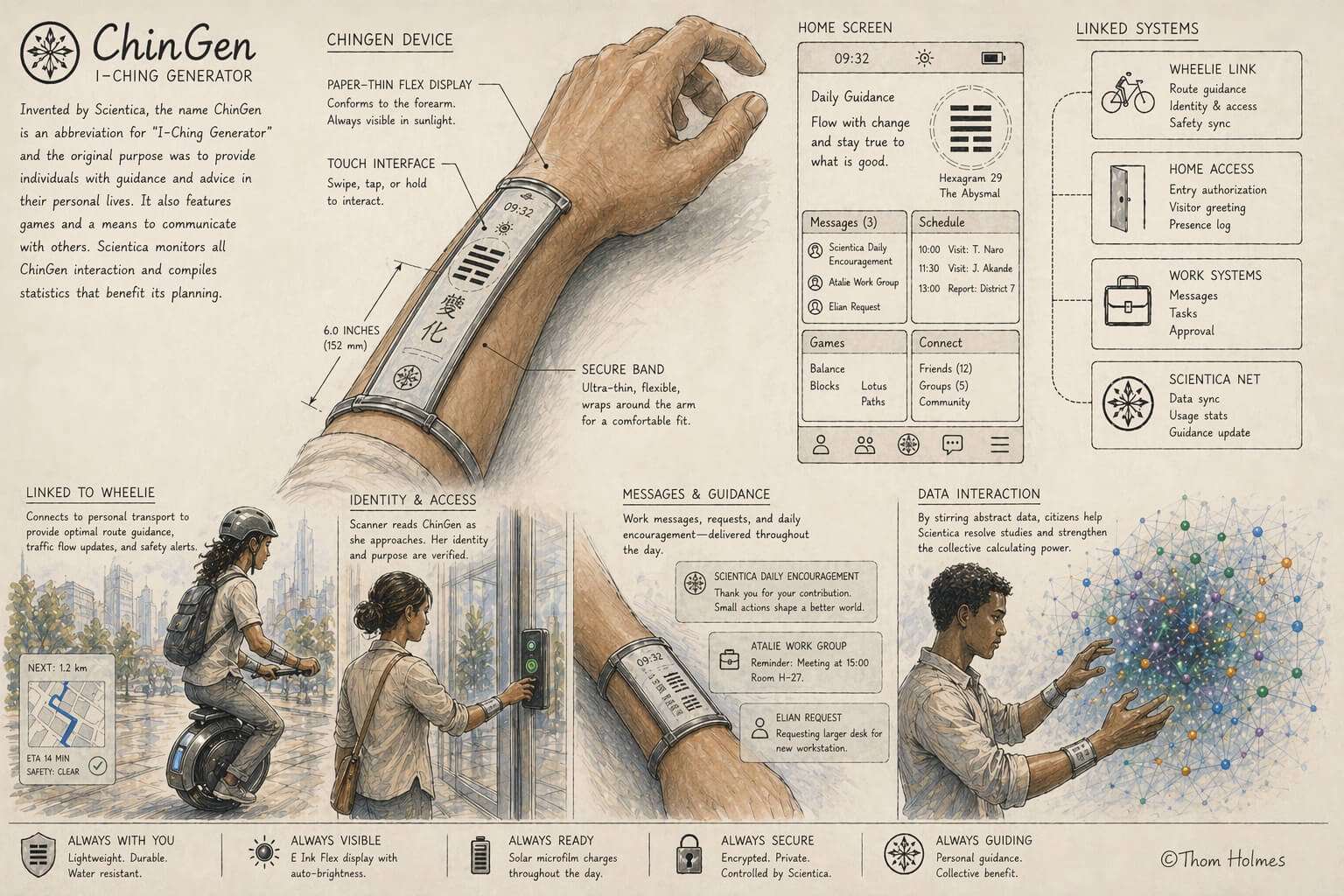
The ChinGen
